Nuremberg (2025) revisits the monumental post-World War II trials that sought justice for the unimaginable crimes committed by the Nazi regime. Set against the ruins of a devastated Europe, the film follows the formation of the International Military Tribunal as judges, prosecutors, and investigators from four Allied nations unite for an unprecedented mission: to hold the architects of genocide accountable before the world.
At the center of the story is U.S. Supreme Court Justice Robert H. Jackson, whose moral clarity and eloquent leadership push the trial forward despite overwhelming political tension. As Jackson and his team assemble evidence—haunting footage of concentration camps, testimonies from survivors, and captured Nazi documents—they face constant pressure from military leaders who fear the trial will destabilize a fragile peace. Yet Jackson refuses to allow the horrors of the war to be buried without judgment.
Parallel to the prosecution, the film offers a chilling look inside the minds of the accused. Hermann Göring, once Hitler’s right-hand man, attempts to manipulate the courtroom with arrogance and propaganda, while other defendants break under the weight of their own guilt. Their conflicting testimonies reveal the internal divisions of the Nazi hierarchy and expose the bureaucratic machinery behind mass murder. The psychological battles in the courtroom become as gripping as the legal ones.
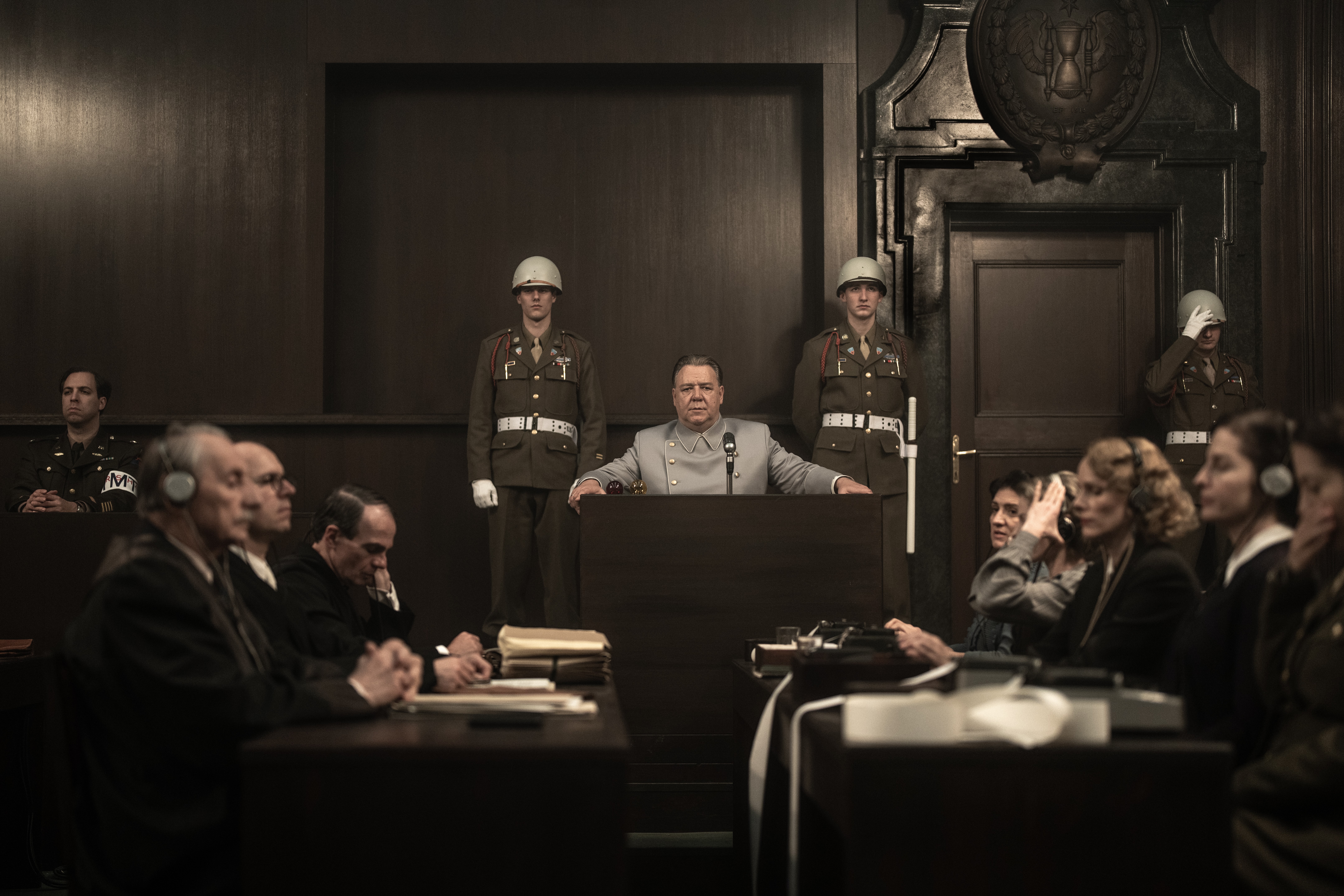
As weeks turn into months, the trial becomes a global stage where humanity confronts the darkest depths of cruelty and the fragile hope for justice. Witnesses deliver heartbreaking accounts of survival, forcing the world to confront the scale of the atrocities committed. The film highlights the emotional toll on prosecutors who must remain composed while presenting evidence almost too horrific to comprehend.
In its powerful conclusion, Nuremberg (2025) shows the verdicts not only as a legal milestone but as a defining moment for international law. The trial establishes the principles of crimes against humanity, individual accountability for war crimes, and the conviction that even the most powerful leaders are not above justice. The final scenes remind viewers that the legacy of Nuremberg continues to shape modern human rights, making the story as urgent today as it was in 1945.