-Shooter 2 (2026): Bob Lee Swagger Returns for a Jungle Mission Defined by Precision, Survival, and Political Intrigue
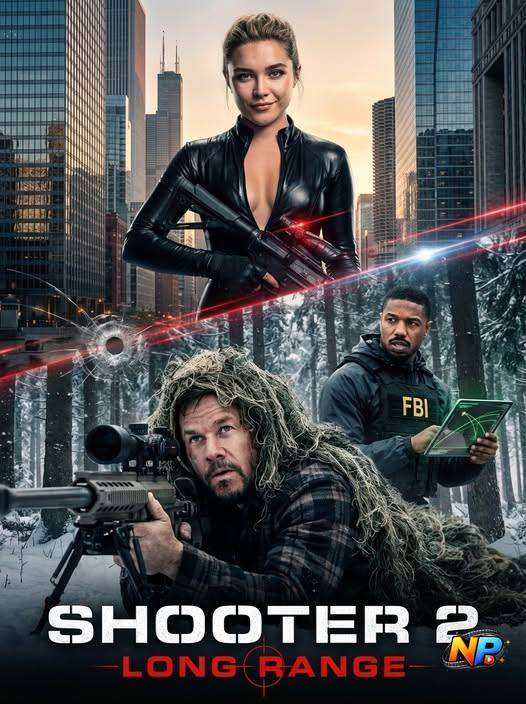
Shooter 2 marks the return of veteran marksman Bob Lee Swagger, with Mark Wahlberg reprising the role that helped establish one of modern action cinema’s most recognizable military protagonists. Set years after Swagger stepped away from active operations, the new chapter places the former sniper in the middle of an international crisis unfolding deep within the jungles of Southeast Asia.
The premise matters because it shifts the franchise from domestic conspiracy into a broader geopolitical arena, where private military power, covert warfare, and fragile diplomacy collide. For Swagger, retirement proves temporary once again.
The mission awaiting him may also become his most personal assignment yet.

Key Developments in Shooter 2
According to the film’s premise, a rogue paramilitary organization launches a campaign aimed at destabilizing a major diplomatic summit taking place in Southeast Asia. The attack threatens not only regional security but also delicate international relationships built over years of negotiation.
Authorities quickly discover that conventional military operations may not be enough.
The enemy operates without borders, without identifiable command structures, and with tactics sophisticated enough to evade modern intelligence networks. The organization relies on mobility, asymmetrical warfare, and advanced battlefield strategies to remain invisible.
That reality leads decision-makers to a familiar conclusion: Bob Lee Swagger is the only operative capable of tracking the threat before events spiral beyond control.
Swagger enters an environment that neutralizes many traditional military advantages. Dense vegetation limits visibility, electronic surveillance becomes unreliable, and every movement through the jungle carries risk.
The hunter quickly discovers he is being hunted as well.
The mysterious figure known as the “ghost in the jungle” appears capable of predicting Swagger’s movements and countering his tactics with unsettling accuracy. The conflict evolves into more than a mission to eliminate a target; it becomes a confrontation between two operators who understand warfare in remarkably similar ways.
- A rogue military syndicate threatens a major diplomatic gathering.
- The mission unfolds across remote jungle environments in Southeast Asia.
- Swagger operates with limited tactical support from an elite team.
- The primary antagonist appears to share Swagger’s battlefield expertise and strategic instincts.
- The investigation uncovers connections to events from Swagger’s military past.


Background and Context
The original Shooter story established Bob Lee Swagger as a character shaped by service, sacrifice, and institutional betrayal. Unlike many action heroes defined primarily by spectacle, Swagger’s appeal came from his professionalism and restraint.
He was never searching for conflict.
Conflict simply had a way of finding him.
Shooter 2 appears determined to preserve those foundations while placing the character within a larger international framework. Rather than focusing solely on personal survival, the sequel introduces questions surrounding private military influence, proxy warfare, and the growing role of non-state actors in modern conflicts.
The jungle setting reinforces those themes effectively.
Military history has repeatedly demonstrated how unfamiliar terrain can reshape power dynamics between technologically advanced forces and adaptable local adversaries. The environment itself becomes an active participant in the conflict, reducing the importance of equipment while increasing the value of patience, observation, and experience.
For Swagger, whose skills depend on discipline and precision rather than overwhelming force, the setting creates an ideal test of character.
The film also appears interested in exploring the personal cost of a life spent in conflict. Years removed from active operations, Swagger enters the mission carrying memories, losses, and unresolved questions from his military service.
Those ghosts may prove just as dangerous as the enemy waiting in the jungle.

Analysis and Potential Impact
One of the more intriguing elements of Shooter 2 is its emphasis on tactical realism and psychological pressure rather than nonstop action.
The central conflict revolves around intelligence gathering, surveillance, patience, and precision. Those qualities distinguish sniper stories from conventional military action films and offer opportunities for sustained tension rather than constant escalation.
The introduction of a rival strategist capable of matching Swagger’s abilities creates an additional layer of complexity. The conflict becomes less about superior firepower and more about decision-making under pressure.
Every movement matters.
Every mistake carries consequences.
The broader geopolitical backdrop also reflects contemporary anxieties regarding private military organizations and decentralized warfare. Modern conflicts increasingly involve actors operating outside traditional state structures, making attribution difficult and response options limited.
By placing Swagger in opposition to a syndicate that profits from instability, the story touches on issues that feel relevant without abandoning its identity as an action thriller.
A thoughtful line emerges naturally from the premise:
“The most dangerous weapon on the battlefield is not the rifle, but the person patient enough to wait for the perfect moment to use it.”
That philosophy has long defined Swagger as both a soldier and a character.

What Works — And What Doesn’t
Based on the available information, Shooter 2 presents several notable strengths.
- The Southeast Asian jungle setting introduces visual variety and tactical complexity.
- The return of Mark Wahlberg provides continuity for longtime fans of the franchise.
- The focus on sniper tactics and reconnaissance offers an alternative to effects-driven action.
- The mirror-image antagonist creates opportunities for psychological conflict alongside physical danger.
- The geopolitical elements add broader stakes beyond individual survival.
There are, however, challenges that accompany this approach.
- Military thrillers often struggle to balance realism with blockbuster expectations.
- The mysterious adversary must feel genuinely distinct rather than simply serving as a reflection of the protagonist.
- Complex political themes require careful handling to avoid becoming secondary to action sequences.
Success will ultimately depend on whether the film can maintain tension while preserving the grounded identity that originally defined the series.
Conclusion
Shooter 2 positions Bob Lee Swagger in unfamiliar territory while preserving the qualities that made the character memorable: precision, discipline, and a reluctance to abandon responsibility when circumstances demand action.
The mission extends far beyond eliminating a target.
It is about confronting unfinished history, navigating hidden loyalties, and surviving a battlefield where visibility is limited and trust is even rarer.
For audiences seeking a military thriller built around tactical intelligence rather than overwhelming spectacle, the project offers a promising direction for the franchise.
Swagger may have believed he had earned his silence.
The jungle, however, appears to have other plans.
Frequently Asked Questions
Who stars in Shooter 2 (2026)?
Mark Wahlberg returns as Bob Lee Swagger, reprising the role of the former Marine sniper at the center of the story.
What is the main plot of Shooter 2?
The film follows Swagger as he attempts to stop a rogue paramilitary organization threatening a diplomatic summit in Southeast Asia.
What genre is Shooter 2?
The project is described as an action, thriller, and military-focused film.
Where does Shooter 2 take place?
The majority of the story unfolds within the dense jungles of Southeast Asia, where terrain and weather become significant obstacles.
What makes this mission different for Bob Lee Swagger?
The mission forces Swagger to confront an adversary whose tactical skills closely resemble his own while uncovering secrets connected to his military past.