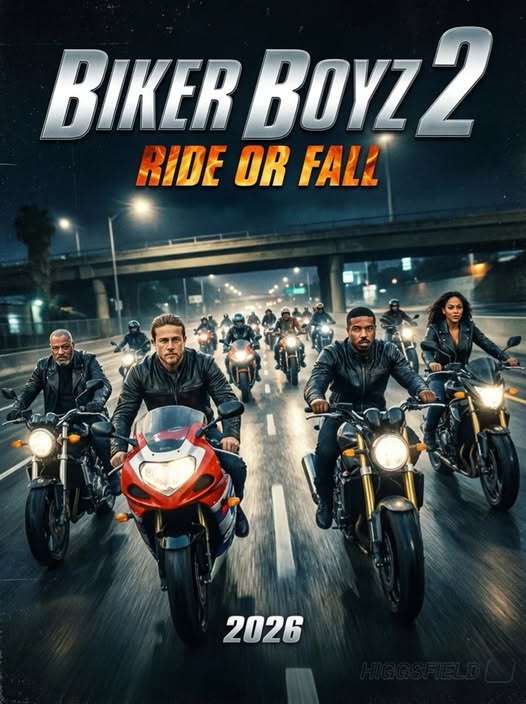
-Biker Boyz 2: Ride or Fall Brings a New Generation Into the World of Street Racing and Brotherhood
Biker Boyz 2: Ride or Fall (2026) revisits the high-speed motorcycle culture that helped define the original film, introducing a new generation of riders while returning to themes of loyalty, legacy, and personal redemption. Starring Charlie Hunnam, Laurence Fishburne, Meagan Good, and Michael B. Jordan, the sequel positions itself as both a continuation of a familiar story and a reflection on how communities evolve over time.
Set against the highways and streets of California, the film explores what happens when old legends meet new ambition in a world where reputation is earned one race at a time.

Key Developments: A New Battle for Respect on the Streets
At the center of Biker Boyz 2: Ride or Fall is Jack “Blaze” Monroe, portrayed by Charlie Hunnam, a veteran rider returning to a motorcycle scene that has changed dramatically since his departure.
Years of conflict and competition have left the community fractured, with rival crews competing for influence rather than unity. Blaze returns with a different goal: rebuilding the sense of brotherhood that once defined the culture.
His mission becomes increasingly difficult with the arrival of Ghost, played by Michael B. Jordan, a talented and fearless rider determined to establish himself as the undisputed king of the streets.
Ghost represents a new generation shaped by speed, visibility, and reputation.
Blaze represents experience, discipline, and tradition.
The collision between those philosophies drives much of the film’s emotional and dramatic tension.
Watching over both men is Smoke, portrayed by Laurence Fishburne, whose presence connects the new story with the legacy of the original film. As mentor, mediator, and living symbol of the community’s history, Smoke becomes the figure attempting to prevent competition from turning into destruction.

Background and Context Behind the Return of Biker Boyz
The original Biker Boyz earned a dedicated following by combining motorcycle racing with themes of family, mentorship, and respect among competitors. While the races delivered excitement, the emotional core of the story focused on identity and belonging.
Ride or Fall appears committed to preserving those foundations.
The sequel arrives during a period when audiences have shown renewed interest in stories centered around practical action, street culture, and character-driven rivalries. Motorcycle films occupy a unique place within action cinema, balancing speed and spectacle with the deeply personal relationships that often exist within riding communities.
By returning to California’s underground racing world, the film places equal importance on atmosphere and character, allowing the environment itself to become part of the narrative.
The streets, garages, and late-night highways are not simply locations.
They are part of the culture the characters are fighting to protect.

Analysis: Legacy and Leadership Take Center Stage
Although motorcycle racing provides the backdrop, Biker Boyz 2 is fundamentally a story about succession and responsibility.
Blaze and Ghost are not merely opponents competing for status. They embody different visions of what leadership means within a community built on pride and independence.
For Blaze, respect is earned through sacrifice and service to something larger than oneself.
For Ghost, success is measured through achievement and recognition.
The conflict between those perspectives reflects broader themes that extend beyond racing culture:
- The challenge of passing traditions to younger generations.
- The tension between legacy and innovation.
- The importance of mentorship in competitive environments.
- The search for identity in communities built on reputation.
These themes allow the film to move beyond straightforward action storytelling and explore the emotional costs of leadership and ambition.
“A legacy survives not because it refuses to change, but because it remembers what made it matter in the first place.”
That idea appears to sit at the heart of the story.

What Works — And What Doesn’t
The strongest aspect of Biker Boyz 2: Ride or Fall is its emphasis on character relationships rather than relying exclusively on spectacle.
The combination of veteran performers and newer stars creates opportunities for meaningful exchanges between generations, giving the story emotional weight alongside its action sequences.
Several elements stand out as particular strengths:
- The rivalry between Blaze and Ghost creates both dramatic and thematic tension.
- Laurence Fishburne’s return provides continuity and credibility within the franchise.
- The motorcycle culture remains central rather than serving as background decoration.
- The themes of loyalty and redemption offer emotional depth beyond racing competition.
The film’s action sequences also appear designed to emphasize practical motorcycle stunt work and high-speed pursuits rather than relying entirely on visual effects.
That approach often creates a stronger sense of realism and physical danger.
However, the sequel faces challenges common to legacy continuations.
- Long-time fans may compare every moment to the original film’s most memorable scenes.
- Balancing nostalgia with new storytelling can be difficult.
- Introducing fresh characters while honoring established figures requires careful pacing.
The success of the sequel ultimately depends on whether it convinces audiences that this world still has meaningful stories left to tell.
Brotherhood Remains the Engine of the Story
One of the more notable aspects of Ride or Fall is its decision to frame motorcycle racing not simply as competition but as community.
The races matter because of what they represent: trust, loyalty, and shared identity.
Every challenge on the road becomes a test of character as much as skill. The motorcycles may command attention, but the emotional stakes emerge from the relationships between the riders themselves.
That focus helps separate the film from more conventional action franchises centered purely on escalation and spectacle.
In Biker Boyz 2, victory means more than crossing a finish line first.
Sometimes it means protecting the people riding beside you.
Conclusion
Biker Boyz 2: Ride or Fall (2026) positions itself as a story about much more than speed. Through its exploration of legacy, rivalry, and redemption, the film attempts to reconnect audiences with the emotional foundations that made motorcycle culture resonate in the first place.
Charlie Hunnam, Michael B. Jordan, Laurence Fishburne, and Meagan Good lead a cast navigating questions that feel increasingly relevant in modern franchise storytelling: who inherits the legacy, and what responsibility comes with carrying it forward?
The roads may have changed over the past two decades.
But the search for respect, purpose, and belonging continues to drive the riders forward.
For the legends of the street, some journeys never truly end. They simply find a new road to follow.
Frequently Asked Questions
What is Biker Boyz 2: Ride or Fall about?
The film follows veteran rider Jack “Blaze” Monroe as he returns to California’s underground motorcycle scene to rebuild unity while facing a new rival known as Ghost.
Who stars in Biker Boyz 2: Ride or Fall?
The cast includes Charlie Hunnam, Laurence Fishburne, Meagan Good, and Michael B. Jordan.
What themes does the film explore?
The story focuses on brotherhood, redemption, loyalty, mentorship, and the challenges of preserving a legacy across generations.
Does Laurence Fishburne return as Smoke?
Yes. Smoke returns as a legendary figure and mentor whose guidance plays a central role in the conflict between old and new generations of riders.
Is Biker Boyz 2 primarily an action film?
While motorcycle races and action sequences are important elements, the film also emphasizes character relationships and emotional storytelling centered on community and identity.