
When the world is crumbling and forgiveness feels like a lost relic, Forgive Us All (2025) steps in as a gripping action-drama that transforms survival into a spiritual battleground. With a powerhouse cast and a storyline soaked in tension, pain, and explosive redemption, this film isn’t just about saving humanity—it’s about saving what’s left of the human heart.
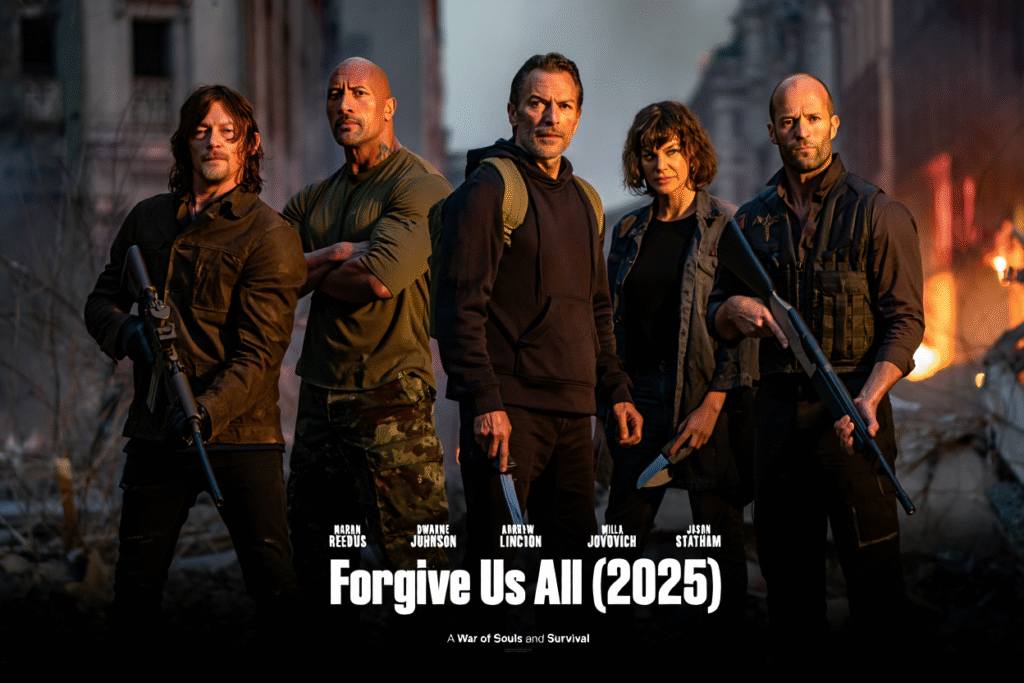
From its haunting opening sequence—smoldering skylines, coded messages, and a shadowy organization tightening its grip—Forgive Us All positions itself as both a pulse-pounding thriller and a character-driven odyssey. The apocalypse isn’t caused by zombies or aliens here; it’s born from mankind’s own sins, secrets, and silent wars.
Norman Reedus is the emotional anchor, delivering a raw, weathered performance as a man dragging the weight of his past across every mile of wasteland. Dwayne Johnson counters with sheer force, embodying a soldier who swears he walked away—only to be pulled back into a fight he can’t escape.

Andrew Lincoln brings intelligence and compassion, offering hope where none remains. Milla Jovovich slices through the film with a fierce resolve, her character’s guilt fueling every blow she strikes. And Jason Statham—cold, efficient, and terrifyingly precise—injects volatility into the group dynamic, reminding audiences that redemption doesn’t come without bloodshed.
Their mission is simple in words, impossible in execution: infiltrate a secret organization triggering a global collapse. To survive, they must cross hostile terrain, confront enemies who know their every move, and face a truth they’ve avoided—their failures shaped the war they are now fighting.
The film shines brightest in its quieter moments—fireside confessions, fractured memories, and reluctant forgiveness glimmering between battles. Here, we see the cost of humanity’s downfall and the fragile thread pulling these broken souls together.

But make no mistake: Forgive Us All delivers action with teeth. Brutal hand-to-hand combat, tactical ambushes, collapsing strongholds, and high-stakes twists keep audiences pinned to the edge. Every victory feels temporary. Every loss stings.
The cinematography paints despair in wide strokes: rain-slick ruins, burnt cities, surveillance shadows. Yet, against all this bleakness, sparks of hope flare—moments where a glance, a handshake, or a whispered apology hits harder than any explosion.
Thematically, the film asks a chilling question: How do you save the world if you can’t forgive yourself? Its answer unfolds through sacrifice, fury, and fleeting grace.
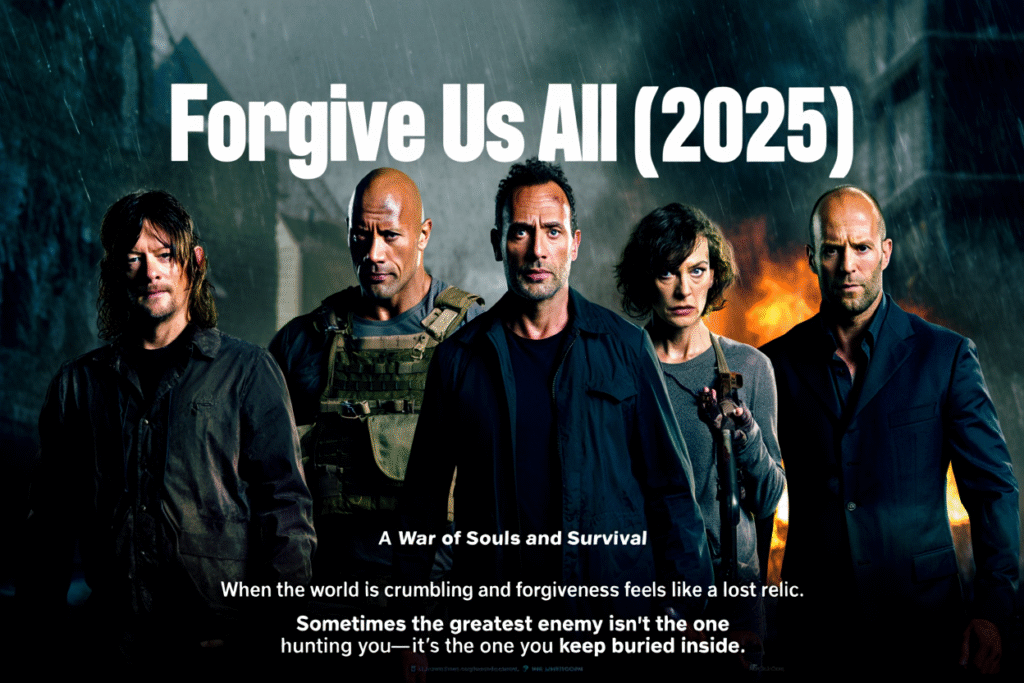
By its final act, alliances fracture, truths surface, and one terrifying revelation pushes the group to their breaking point. Redemption is earned—not granted. Survival is a privilege—not a guarantee.
Forgive Us All (2025) is a gritty, emotional, adrenaline-fueled journey that proves sometimes the greatest enemy isn’t the one hunting you—it’s the one you keep buried inside.