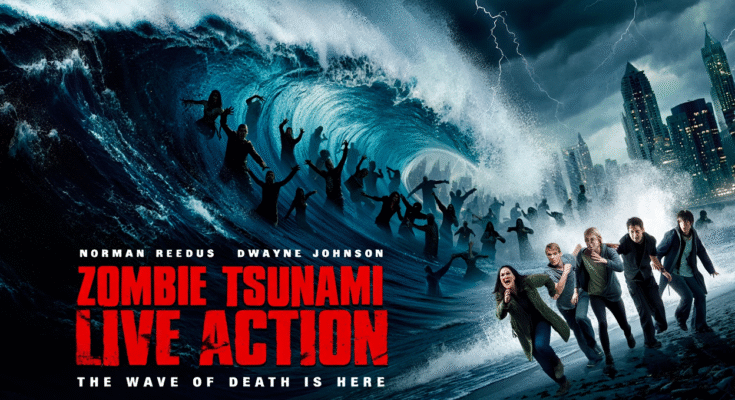
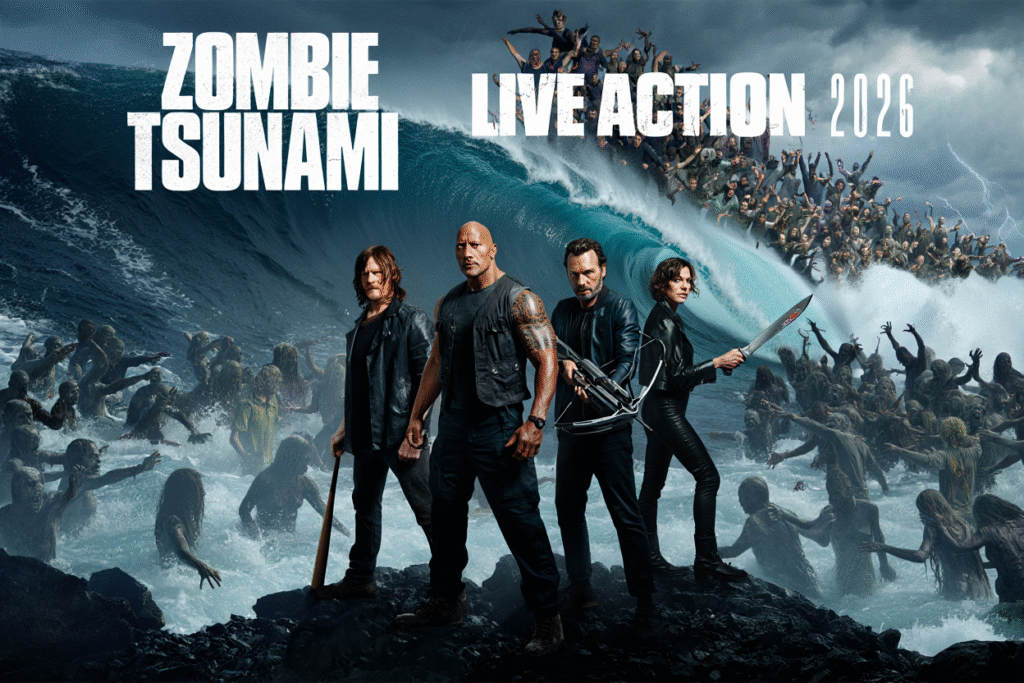
Zombie Tsunami: Live Action (2026) is a ferocious collision of disaster cinema and undead horror, delivering a spectacle that is as relentless as the wave that starts it all. It’s not just a movie—it’s an assault, a flood of chaos that drags you under from the very first scene and refuses to let you surface until the final breathless moment.
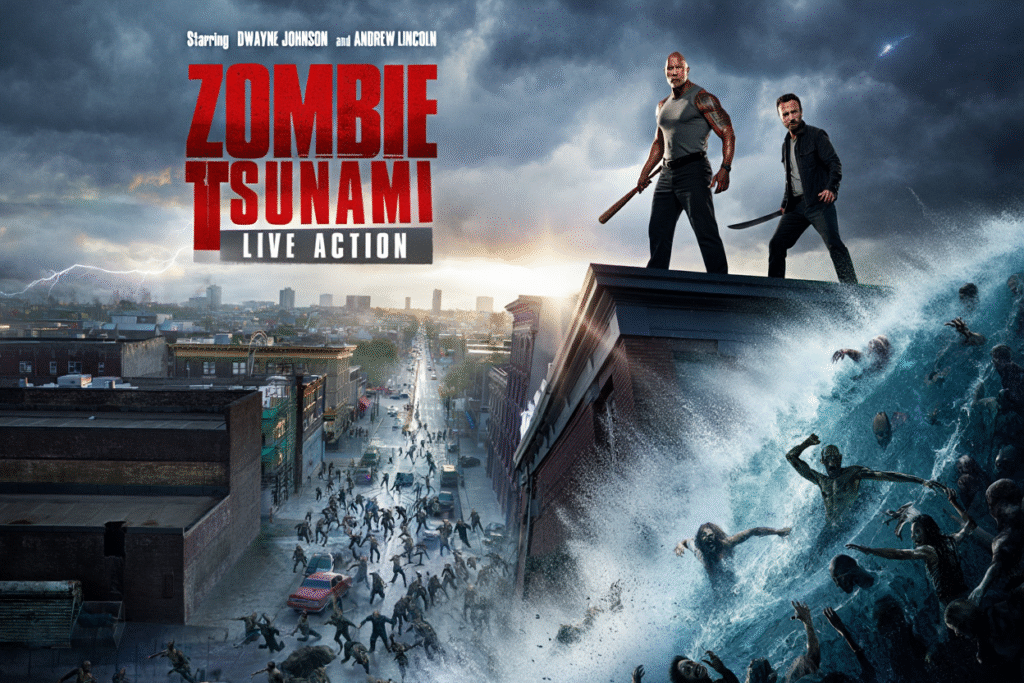
The film opens with an ominous calm stretching across the coastline. Families stroll the beaches, fishermen work the docks, and the world feels eerily peaceful. But beneath the surface, something ancient and monstrous is stirring. When the ocean suddenly folds into itself and surges upward, the first massive wave crashes ashore—not with water alone, but with bodies. Hundreds. Thousands. The dead rising with the tide.
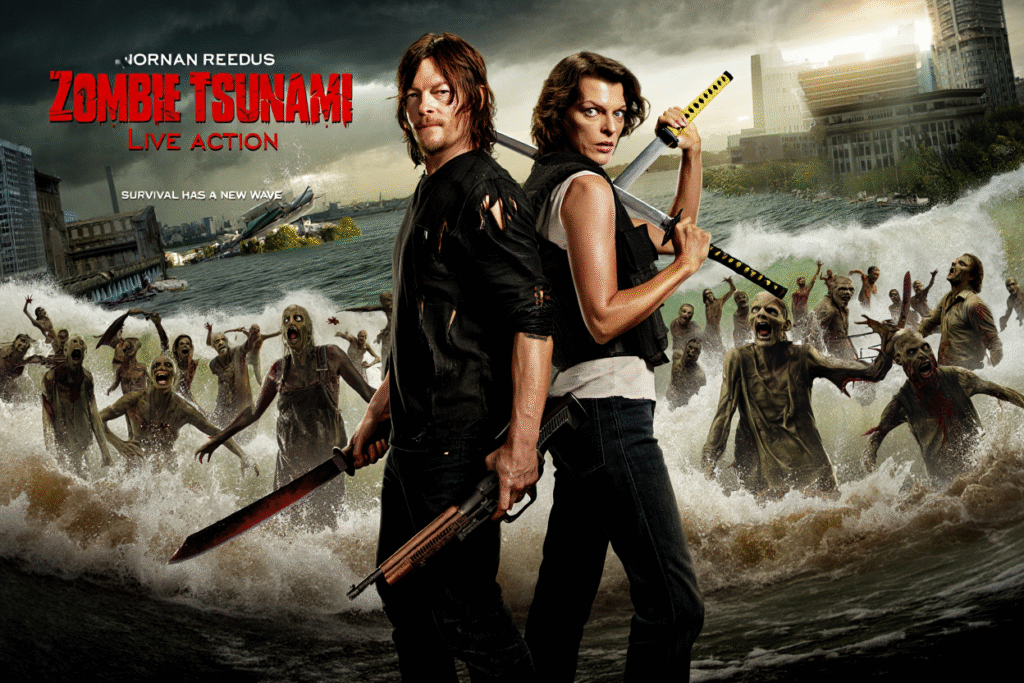
Norman Reedus anchors the story with a gritty, understated performance as a lone survivor who has long learned to trust no one but himself. His quiet strength becomes the heartbeat of the group, guiding them through flooded streets, collapsing buildings, and hordes of waterlogged corpses that move with horrifying unpredictability.
Dwayne Johnson brings brute force and surprising sensitivity to his role as a former rescue diver haunted by a mission he failed to complete. His character’s internal conflict—saving strangers while knowing he couldn’t save someone he loved—adds emotional gravity to the explosive action. His dynamic with Reedus is electric: one man cautious and haunted, the other explosive and determined.
Andrew Lincoln steps into the role of strategist, a former scientist whose knowledge of oceanic pathogens becomes the group’s most valuable weapon. His discovery—that the tsunami awakened organisms that mutate the dead into faster, stronger predators—shifts the film from disaster survival into biological warfare. It’s his calm intellect that keeps the survivors one step ahead… until the ocean decides otherwise.
And then there’s Milla Jovovich—fierce, deadly, and mesmerizing. Armed with twin blades and an unbreakable will, she becomes the group’s vanguard, carving through the undead with balletic brutality. Her presence elevates every scene, transforming each confrontation into a dance of survival and artistry.
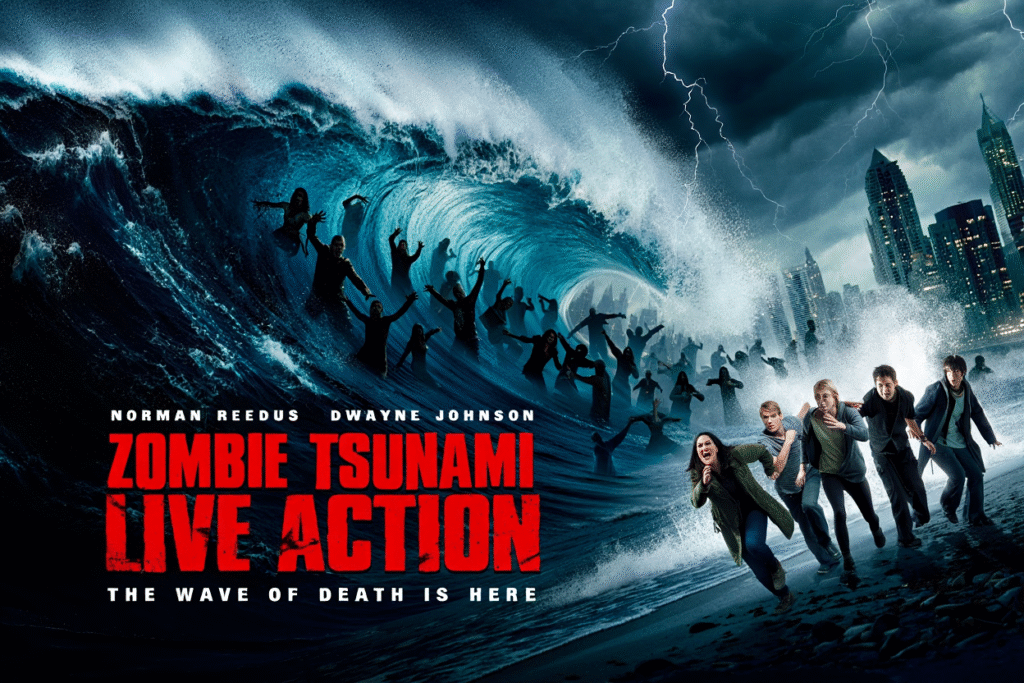
As the survivors navigate drowned cities, overturned ships, and labyrinthine sewer tunnels filled with seawater and shadows, the film constantly reinvents its threats. The zombies here are unlike anything audiences have seen—swaying like kelp, lunging with tidal force, and emerging silently from the depths with eyes as black as the abyss.
Every time the characters think they’ve reached safety, another wave hits—sometimes literal, sometimes metaphorical. And with each surge, the group is pushed to confront not just the undead, but their own fears, secrets, and guilt. Survival becomes not just physical, but deeply emotional.
Director Jaxon Harlow crafts chaos with breathtaking precision. The set pieces—an overturned cruise ship filled with floating corpses, a flooded subway that becomes a death trap, a rooftop rescue during a second tsunami—are not just visually stunning; they’re suffocatingly immersive. You feel the water rising. You hear the distant groans beneath the surface. You dread what the next wave will bring.
The heart of the film, however, lies in its exploration of humanity’s resilience. Even as the world sinks, even as darkness floods every corner of civilization, the survivors cling to the smallest sparks—shared memories, whispered hopes, fierce promises to protect one another. And by the final act, Zombie Tsunami becomes more than a disaster epic. It becomes a testament to what it means to fight when the world gives you nothing left to stand on.
The climax—set atop a collapsing coastal tower as the third and largest undead wave hits—delivers one of the most breathtaking, pulse-pounding sequences in modern action horror. It’s brutal. It’s tragic. It’s heroic. And it leaves viewers stunned in the best possible way. In the end, Zombie Tsunami: Live Action (2026) stands as a monstrous, explosive, emotionally charged spectacle—a tidal wave of fear and courage that proves the apocalypse doesn’t always begin with fire.
Sometimes, it begins with water.